Key Business Goals:
Increase revenue generated from contract bonuses
via total monthly active users engaged on the appIncrease patient and member retention
via repeat engagement with activitiesImprove patient health outcomes / symptoms
via coordination of care and personalized content
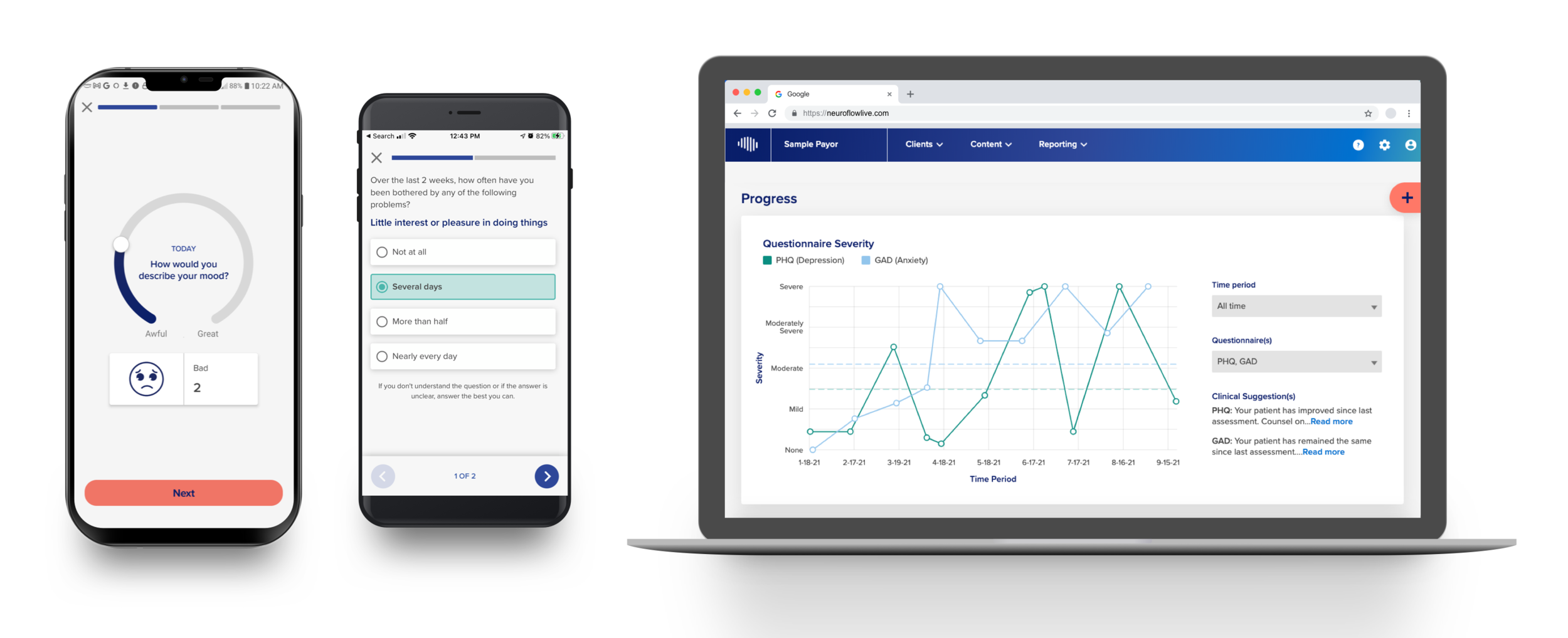
NeuroFlow’s company mission is to promote behavioral health access and engagement in all care settings for improved population health outcomes. This is achieved through the provider and organization web platform and the patient web and app experience. Both platforms communicate with each other to ensure patient and member populations stay connected to care teams and the highest risk individuals are identified and triaged when it matters most.
Risk level and severity are calculated based on how a patient scores from clinical assessments delivered in the app along with other points of input throughout the app experience. A core motivator of the patient and member populations are the gamified reward points that are earned and go toward gift card incentives from vendors like Amazon, Starbucks, Target and Home Depot.
Click to view overview of how I produce and communicate business value using user-centered research and product management techniques.
Goal Setting Feature
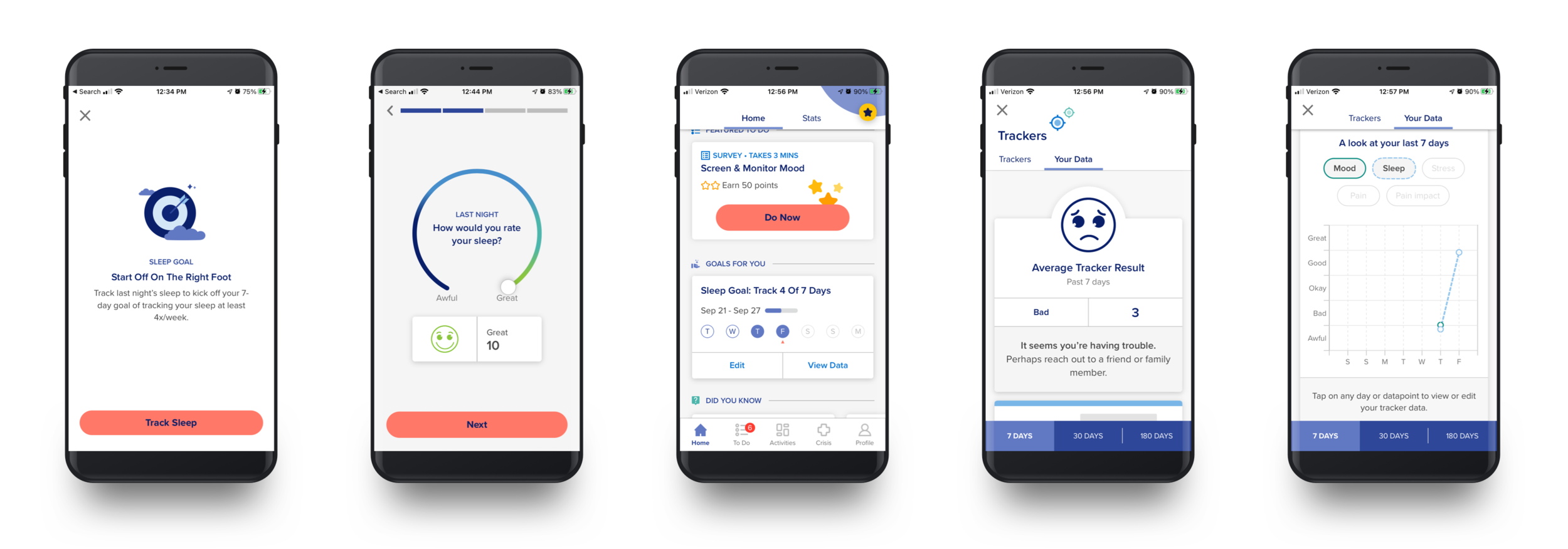
“Goal Setting” was one of the initiatives to achieve our business goal of driving more repeat engagement to generate more revenue through contract bonuses. Our hypothesis was that we could increase repeat engagement by providing a more personalized experience. This was done by developing a slim MVP that only allowed users to set a sleep goal. A wider array of goals could be built once the feature’s value was validated.
During onboarding, users told the system of areas in their life they wanted to improve. We used this data from the backend to help us target the subset who wished to improve their sleep. On the home screen we promoted the health benefits of setting a sleep goal and then used gamification to keep users tracking their sleep over a 7-day period. We found that users were more likely to come back again and complete a clinical assessment when we pathed users to the “Your Data” tab where they could learn about trends in their data over time and how their mood, stress or pain levels correlated with their sleep.
Our primary key performance indicator (KPI) was weekly active users (WAU) and secondary KPI was repeat assessment compliance. We saw a 12.7% increase in WAU and a 4.5% increase in assessment compliance.
Applying for the Product Management role
To share my approach to product management and software development with the team at NeuroFlow, I set out to put together a comprehensive application of my full skill set and processes.
The Brief
As more and more providers entered their platform, rapidly inviting their patients, NeuroFlow wanted to make sure that all patients would be successful. I was given a spreadsheet containing a few hundred patients added over the past 60 days, with the date the patient was created (aka invited to the platform by their provider), the date they registered for an account, the name of their organization, and the number of homework assignments the patient had completed. I was then asked what this data showed about the success of NeuroFlow’s latest patients and told that this would likely not be enough data and should ask for more.
Final Proposal
Given a little over a week, I reviewed the shared data set and conducted a remote stakeholder interview to gather additional insights for actionable improvements. Finally, I proposed a set of specific strategic solutions alongside a sample prioritization matrix. This proposal was then presented to the NeuroFlow team and exceeded expectations.
👇Click the image below to view the full slide-by-slide proposal. 👇